“Drink wine and look at the moon
and think of all the civilisations
the moon has seen passing by.”
― Omar Khayyam, Rubaiyat of Omar Khayyam

Photo taken with a hand-held Canon SX50, testing the zoom. Fuzzy wisdom.
“Drink wine and look at the moon
and think of all the civilisations
the moon has seen passing by.”
― Omar Khayyam, Rubaiyat of Omar Khayyam
Photo taken with a hand-held Canon SX50, testing the zoom. Fuzzy wisdom.
My rock garden is blooming and abuzz with hummingbirds and bees. The birds and the bees, it must be spring!
Our side of the island is very dry in summer, and my plant choices reflect that. The little rock roses (Cistacea) I bought several years ago now dwarf the bird bath (note to self: move bird batch into a “clearing” to provide a better landing strip for my winged friends). Here is the first bloom, so papery and delicate, it just sings of spring… Both of my rock roses are covered with buds, so there will soon be a symphony.

Good thing that I like succulents, because it makes dry gardening much easier. Their textures are very interesting and I have built quite the collection, both of the kind that can make it through our winter, and the kind that must come indoors during the wet and cold months. The latter are arranged in containers (photos in another post soon).
Below, a close-up of hens and chicks (Sempervivum tectorum) and another delicate one whose name I have forgotten (it blooms delicately in white).

And then, the other tough plants that can stand the dry time, and survive our winters: the Spanish lavenders (Lavandula stoechas).

These early-blooming lavenders have taken over the job of keeping the bees entertained from the rosemary bushes and are abuzz with activity. When I walk into the garden, the buzzing is very noticeable. Bees and others love, love, love the Spanish lavenders right now.

Above, a lilac version. I also have a really dark purple one, and somehow, these two have self-hybridized in the garden and produced this new version below, all white wings with little lilac blooms… Some of the junior plants are half-lilac and half-white.
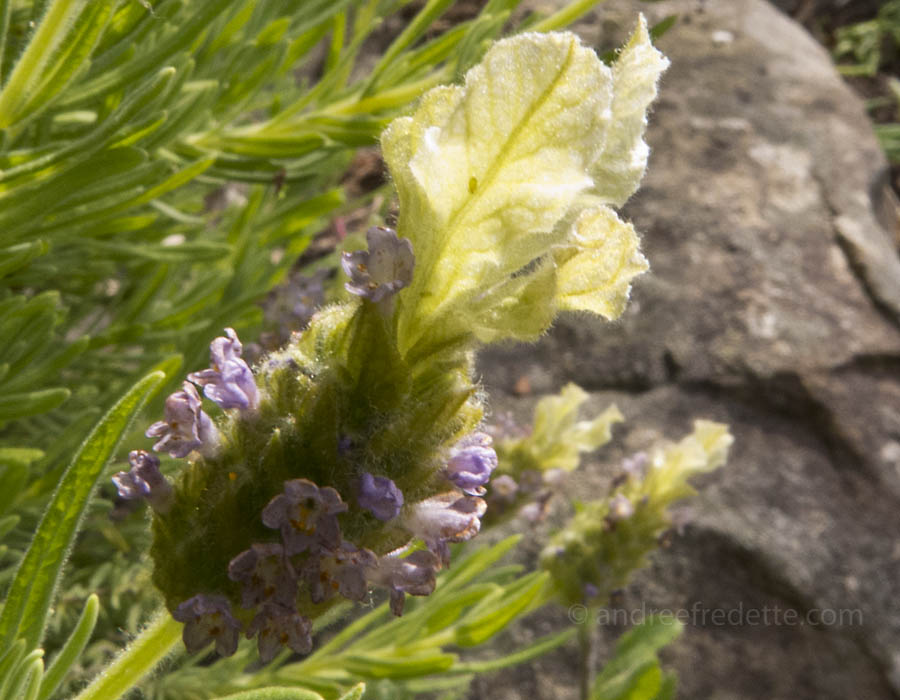
I completely approve of plants that reproduce in my garden, and come up with new “jazz” versions.
The Seattle Art Museum is a treasure trove. A great place to spend an afternoon, and to “travel” the continents, admiring art and artifacts from around the world. Until May 17, the SAM features Indigenous Beauty, an exquisite special exhibition. Don’t miss it. This post is not about that particular exhibition (because photography was not allowed in that section), but it focuses on the art and artifacts of West Coast artists from several First Nations.
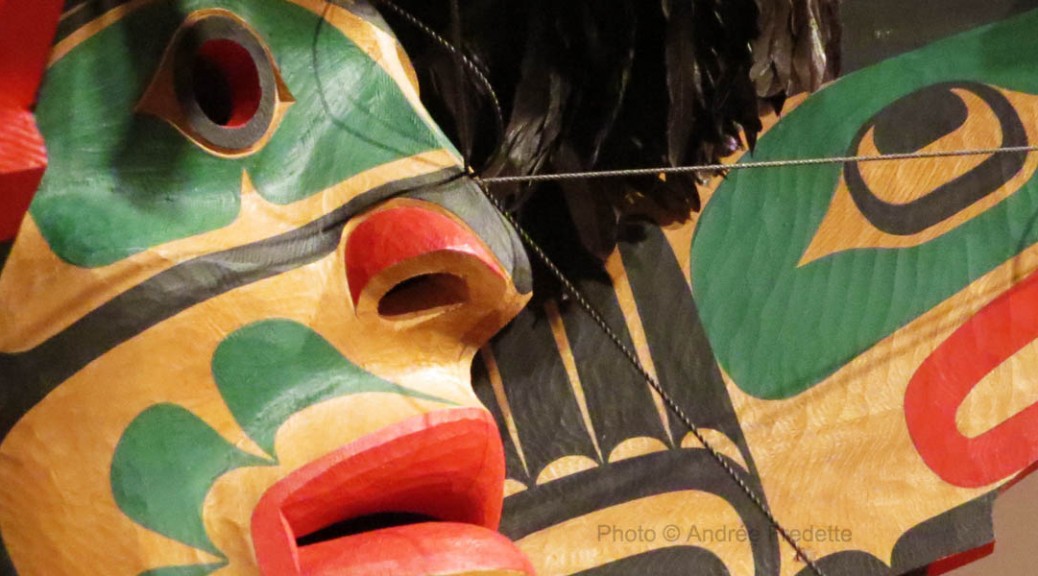
First, a quick description of the very colourful transformation mask pictured above: this is part of a full set of Thunderbird regalia by Calvin Hunt, a Kwakwaka’wakw artist from Fort Rupert (or Tsaxis), on the northern tip of Vancouver Island, BC.
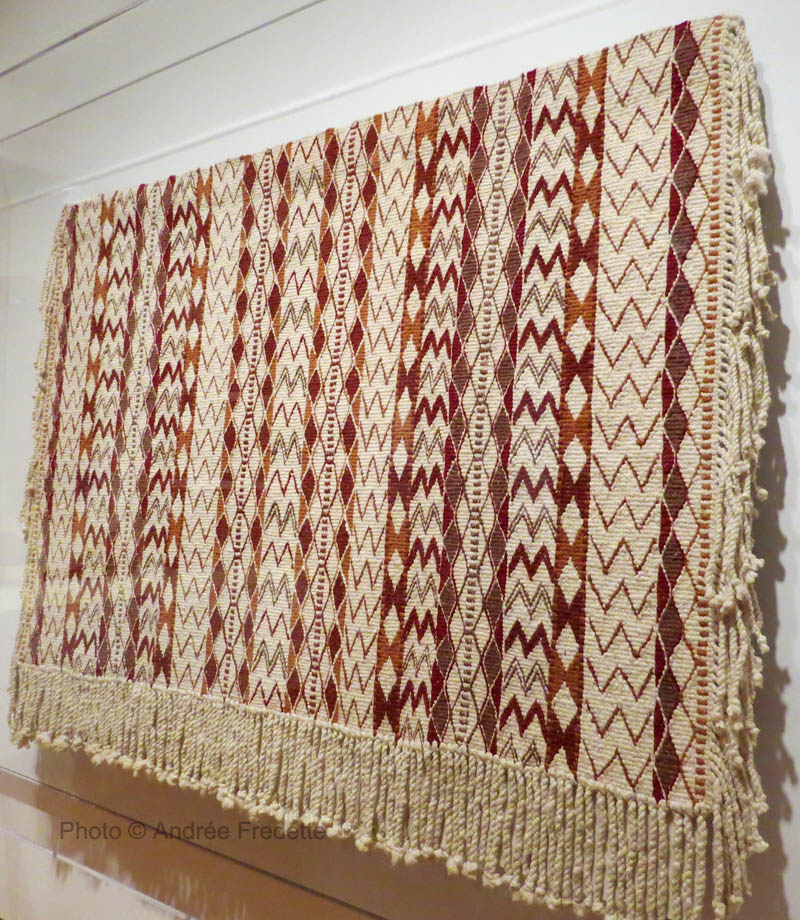
Above, Sacred Change for Each Other, a blanket woven by Susan Pavel. This American artist is an adopted Skohomish. This is the first Salish mountain goat wool robe to be woven in 100 years, and a gift to the museum in 2007. According to the artist:
“This robe or blanket is more than just a garment: it is a feminine entity that has come forth to bring many teaching. The “Sacred change” refers to the revitalization of Coast Salish cultural practices. The wavy lines and zigzags represent the life force, while the dashes are backbones, reminding us to be strong against life’s challenges.”
On to the powerful work of Susan Point, a remarkable Coast Salish artist of the Musqueam band, in Vancouver, BC, who works in red and yellow cedar, as in the piece below, The First People, but also creates commissions in metal, cast concrete, and so on. Check out her public art pieces for the City of Seattle, on her website. And take a look at her serigraphs, at the Spirit Wrestler Gallery website.

I closed in for a detail shot, to show the contrast between areas with deliberate tool marks, and the very smooth finish of the faces.

Then, the piece below stopped me in my tracks. Human Being Neck Ring (Bagwikala), is an accessory for the Kwakwaka’wakw dancer.
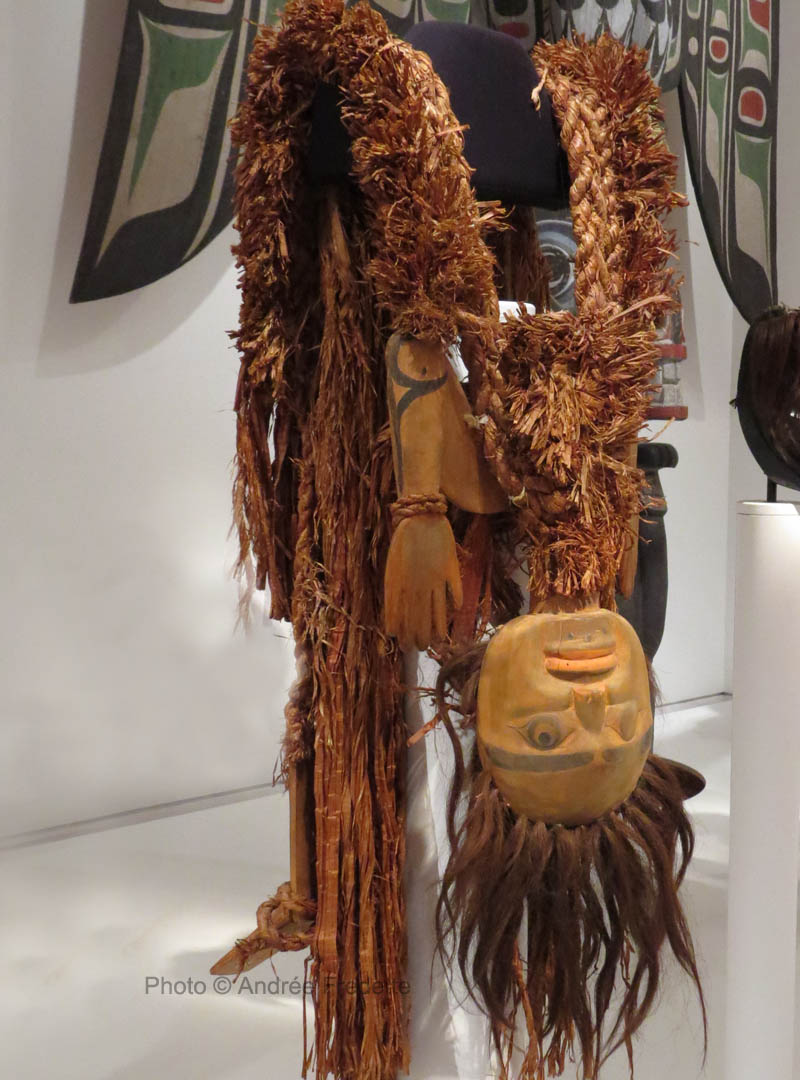
I am very interested in native ceremonial regalia and have admired many masks and accessories for dancers in museums and galleries all over North America. But I have never seen a human being neck ring before. This one was made by Mungo Martin or Charlie James, around 1910. Here is the museum’s description of its meaning:
“Red-dyed cedar bark neck rings are part of the costume of the hamat’sa. As the dancer is progressively tamed, his costume changes from the hemlock bows that he wears when he’s in a wild condition, to red-dyed cedar bark neck rings, arm bands and ankle bands, and eventually to the blanket or robe which he wears in his tame state. Some neck rings have carved figures added. There are only two or three other known examples of neck rings.”
The Hamat’sa is a winter dance, an element of a complex ritual. If you are curious about that ritual, click on this video.
Returning to Calvin Hunt’s dancer’s regalia with which I started the post (mask at the top), the photo below shows the “leggings and toe covers” for the dancer.
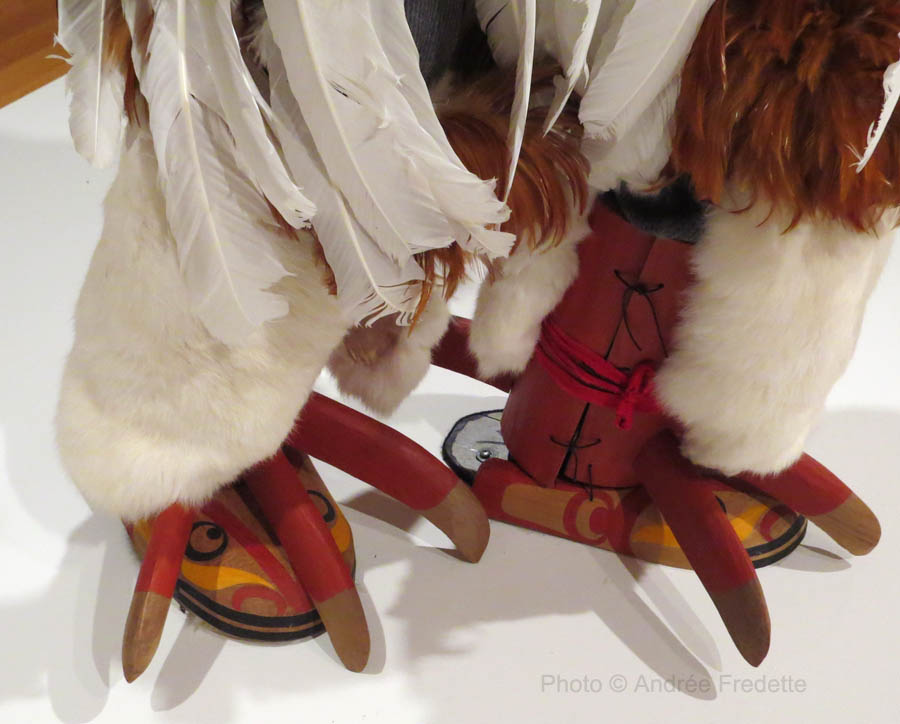
Well, I started this post at the head, with a powerful mask by Calvin Hunt, and am finishing it at the feet of the same regalia. Take a minute to reflect on the meaning of these costumes, the investment in time and effort required to create them, traditionally, for those special occasions. And the imagination and beliefs that powered it all.
Going through old files, remembering our Ontario cottage… This photo was taken from a canoe, on a July morning, early, when things were very quiet on the lake.

Beautiful Yellow pond-lily, growing near an island in the middle of Little Kennisis Lake.
That early morning paddle meant quiet water: no powerboats and no waterskiers. Just me and some beavers, a pair of loons, oh… and a bullfrog.
Because after my paddle around the lake, I found an impressive American bullfrog (Rana catesbeiana), waiting for me on the dock ladder. I didn’t disturb it, just went around to the other side.
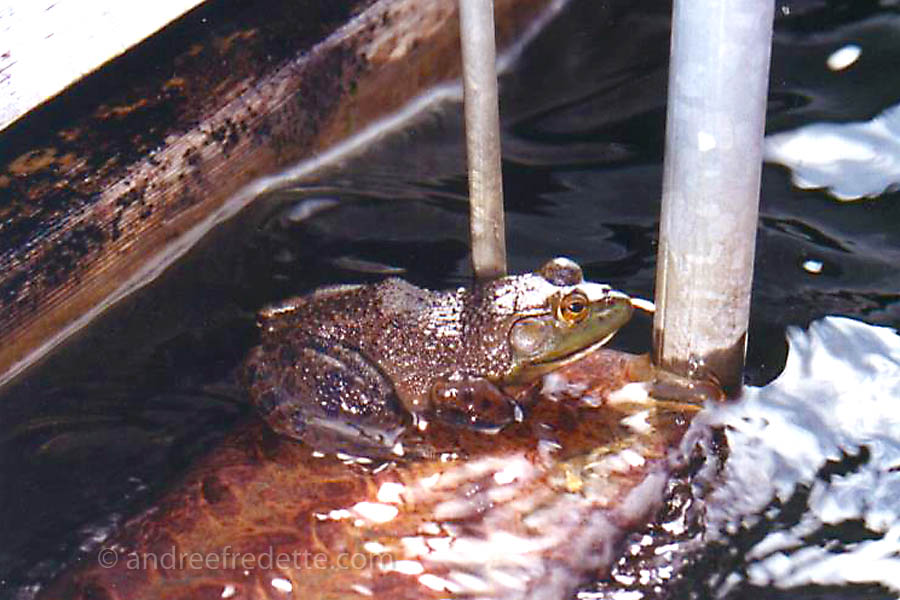
I sigh with pleasure, when I remember that morning.
My friend Anne Popperwell is an artist whose paintings are sensuous and beautiful.
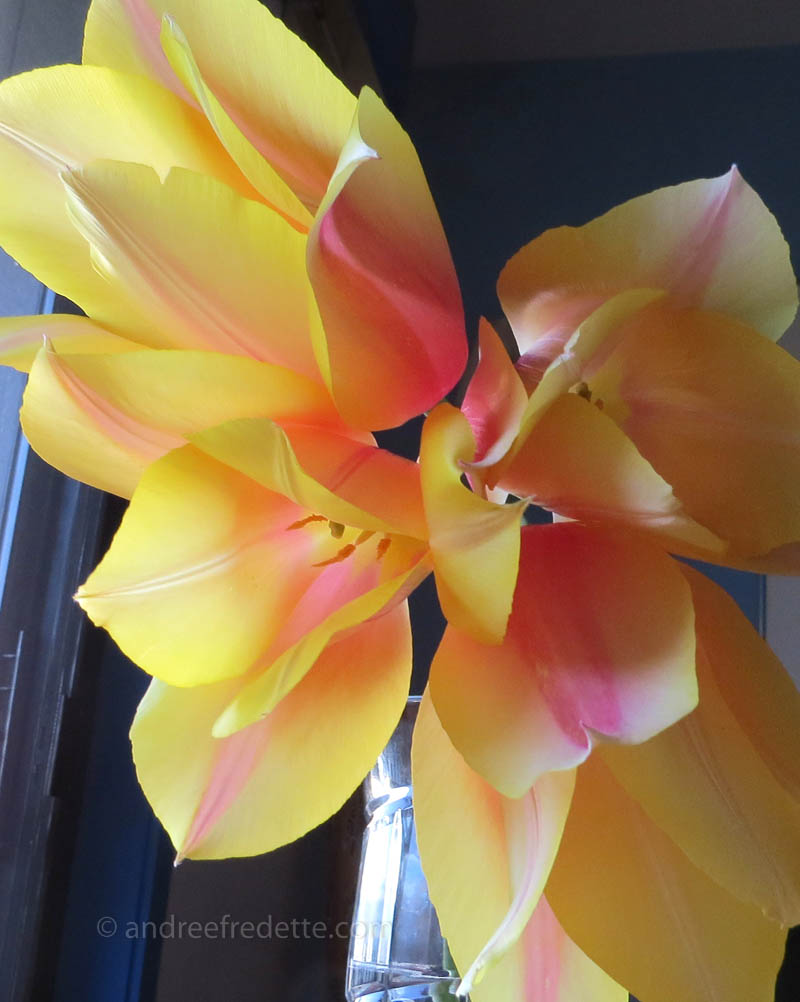
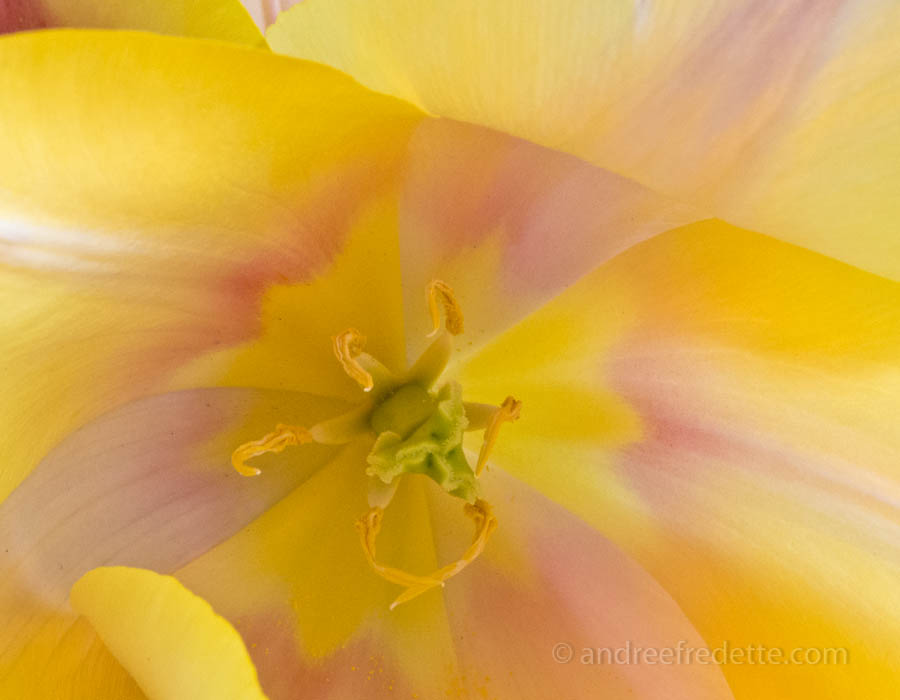
Last week, she brought me these gorgeous “Blushing Beauty” tulips, and explained that she planted the bulbs in her garden because she wanted to paint the flowers, when they bloomed.

I can see why she wanted to paint them! I have never seen a tulip of that size before. They are very large and so elegant.
For several days, Beauty resided on my table.
Here is a final close-up…