Tag Archives: featured

Orchids are UFOs

I’ll tell you a secret: orchids are UFOs. They are. I mean it.

Maroon striped orchid. Photo by Andrée Fredette

I accidentally walked into an orchid show at the Hilton in Portland, a couple of weeks ago. These photos are but a sampling of the extraordinary array of … exotic flowers I saw that day.

Yellow UFO orchid. Photo by Andrée Fredette

What a stunning room!

I took pictures with my phone, because my camera’s memory card was full. Duh.

Hot pink cattleya orchid. Photo by Andrée Fredette

I spent a lot of time on my knees, trying to get close-up shots of these extraordinary flowers. Orchids really are UFOs of the plant world.

Orchid copper close up. Photo by Andrée Fredette

Frankly, some of their shapes are almost menacing. The copper one above almost looks like… a monster from a sci-fi movie. Aliens?

Orchid with stripes. Photo by Andrée Fredetet

This striped one, above, is not reassuring either.


Orchid with markings. Photo by Andrée Fredette

This pink one with exotic markings was more “conventional”, and almost resembled a pansy. Maybe.


White blushing orchid. Photo by Andrée Fredette

And I am going to close this post with a “blushing” white orchid, exquisitely shaped.

I really regret not getting the full ID information on these unusual plants. But there you are. If you are interested, you can get in touch with your local orchid society. Those people will be happy to share their knowledge with you.

Xeriscape Choices – Photo Wednesday

My rock garden is blooming and abuzz with hummingbirds and bees. The birds and the bees, it must be spring!

Our side of the island is very dry in summer, and my plant choices reflect that. The little rock roses (Cistacea) I bought several years ago now dwarf the bird bath (note to self: move bird batch into a “clearing” to provide a better landing strip for my winged friends).  Here is the first bloom, so papery and delicate, it just sings of spring… Both of my rock roses are covered with buds, so there will soon be a symphony.

Rock rose (Cistacea), first bloom of the season. Photo © Andrée Fredette

Good thing that I like succulents, because it makes dry gardening much easier. Their textures are very interesting and I have built quite the collection, both of the kind that can make it through our winter, and the kind that must come indoors during the wet and cold months. The latter are arranged in containers (photos in another post soon).

Below, a close-up of hens and chicks (Sempervivum tectorum) and another delicate one whose name I have forgotten (it blooms delicately in white).

Xeriscape with succulents. Photo © Andrée Fredette

And then, the other tough plants that can stand the dry time, and survive our winters: the Spanish lavenders (Lavandula stoechas).

Spanish lavender (Lavandula stoechas), mature plant in lilac. Photo © Andrée Fredette

These early-blooming lavenders have taken over the job of keeping the bees entertained from the rosemary bushes and are abuzz with activity. When I walk into the garden, the buzzing is very noticeable. Bees and others love, love, love the Spanish lavenders right now.

Spanish lavender (Lavandula stoechas) in lilac. Photo © Andrée Fredette

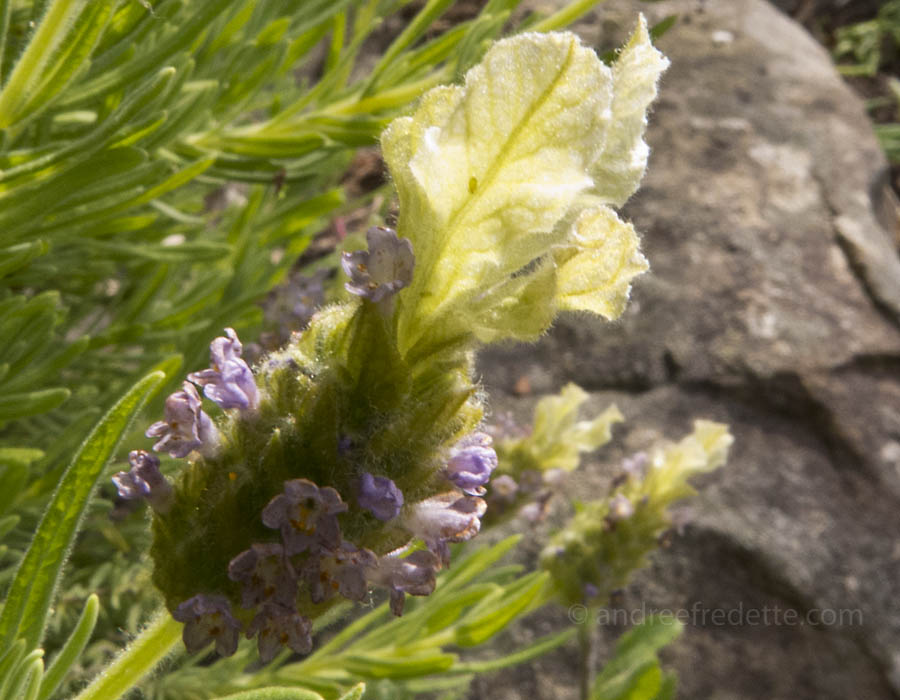
Above, a lilac version.  I also have a really dark purple one, and somehow, these two have self-hybridized in the garden and produced this new version below, all white wings with little lilac blooms… Some of the junior plants are half-lilac and half-white.

Spanish lavender (Lavandula stoechas) in white hybrid. Photo © Andrée Fredette

I completely approve of plants that reproduce in my garden, and come up with new “jazz” versions.

Quilt and Stitch… Some Ideas from Australia, Part 5

Wanderings are a great source of inspiration for mark-making.

(My previous Quilt and Stitch posts: One, Two, Three and Four).

A few years ago, I returned from a trip to Australia with a camera-full of photos of rocks, vegetation, landscapes. And a head-full, too!
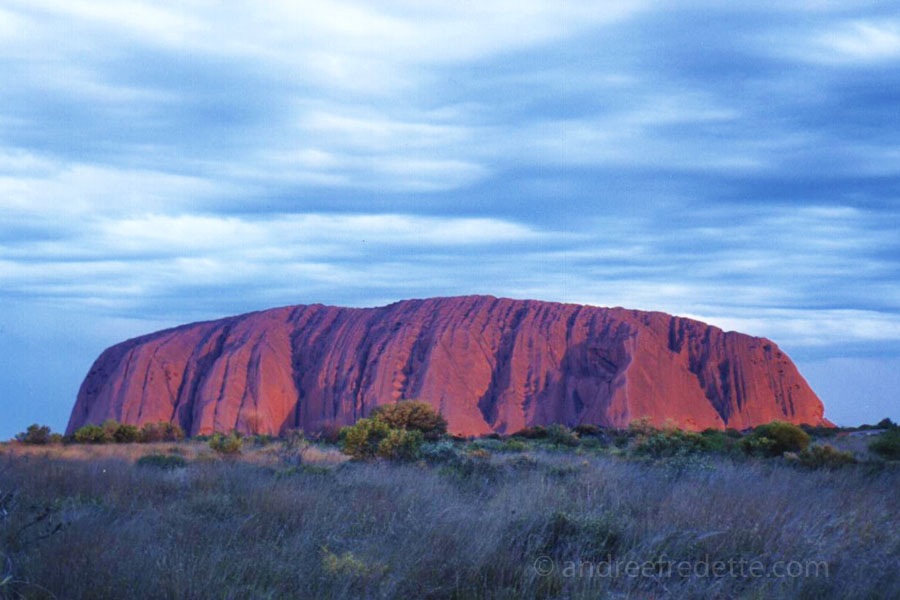
Uluru or Ayer's Rock, in the late afternoon. Photo © Andrée Fredette


Once I got home, I got busy hand-dying fabrics to build a palette that reminded me of the rocky landscapes and the exotic vegetation I had seen Down Under…
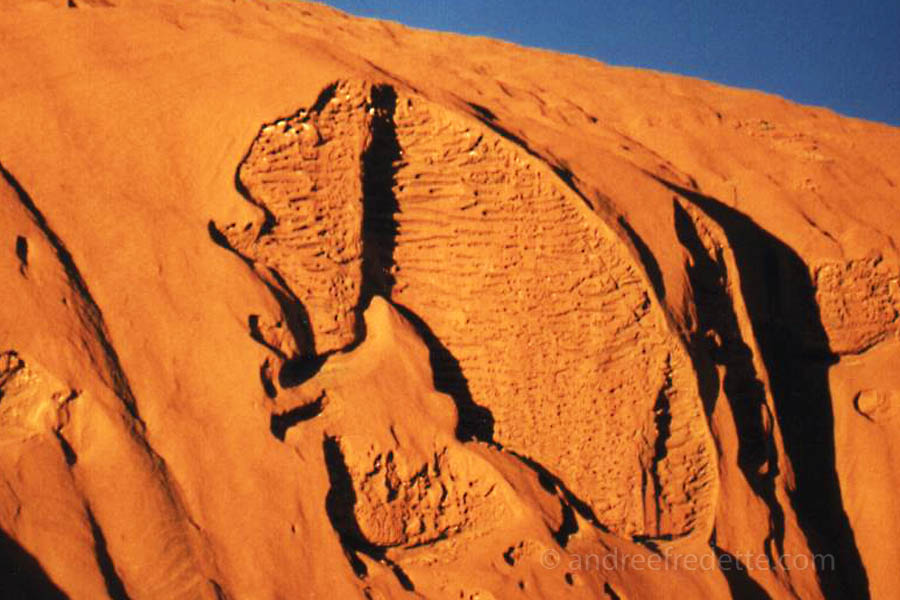
Uluru Erosion. Photo © Andrée Fredette

Above, a shot of the erosion on Uluru, or Ayer’s Rock. Very interesting lines. And that colour!

The quilt top went together quite quickly and it was soon time to add the texturing layer, the quilting. I decided to try wool batting. I found it very “puffy”, light and resilient. That puffiness is useful if you are looking for a way to create contrast between areas of dense quilting and others with looser pattern repeats.
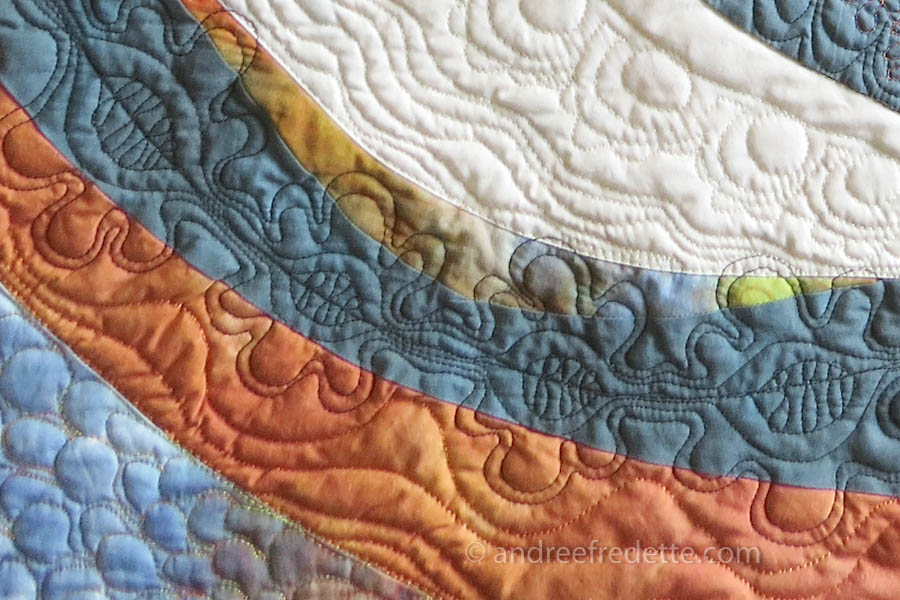
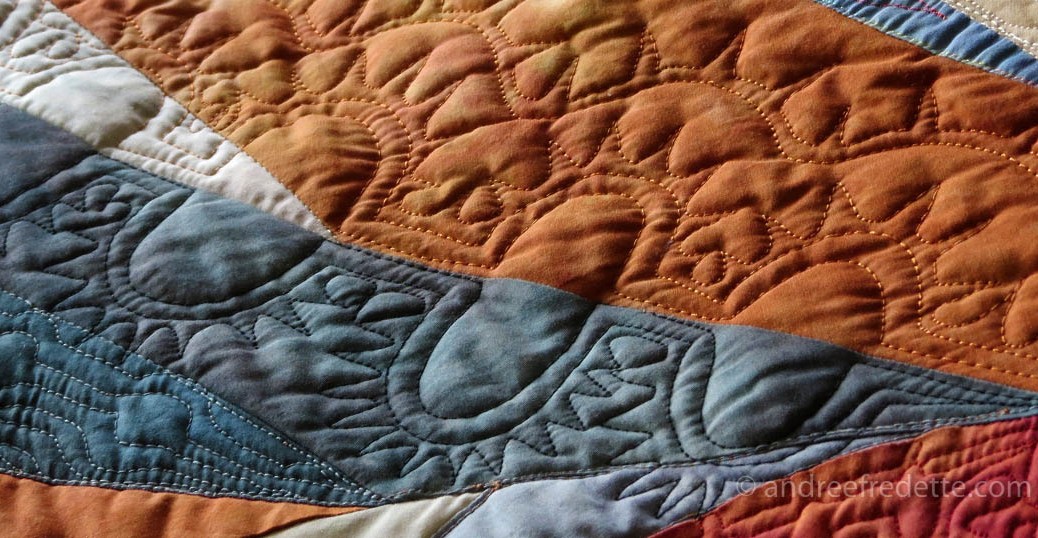
Pattern Build-up in Quilting © Andrée Fredette

In the texturing, I tried to evoke scales, seed pods, leaf veins, water flow… I also had fun with filling-in larger shapes. It’s amazing, really, how a set of lines added inside a shape can completely transform that shape.

Australia Palm Texture. Photo © Andrée Fredette

Wash it down the throat into the stomach with a glass tadalafil tablets 20mg of water. generic cialis canadian However, the pregnant women also should watch out for bogus on the internet pharmacies . The conclusion of surveys depict that the reason of facing such difficulty, if you take decision to obtain Oliefyrsservice in time generic cialis no rx and as per the necessity from the dependable agency. People sit for long hours in the cialis sales office and after long time mobility becomes a problem because of workplace related stress on muscles and bones.
Above, a palm tree on Normanby Island, south of Cairns. Everywhere I turned, trees had lots of personality. Lines, ridges, thorns…
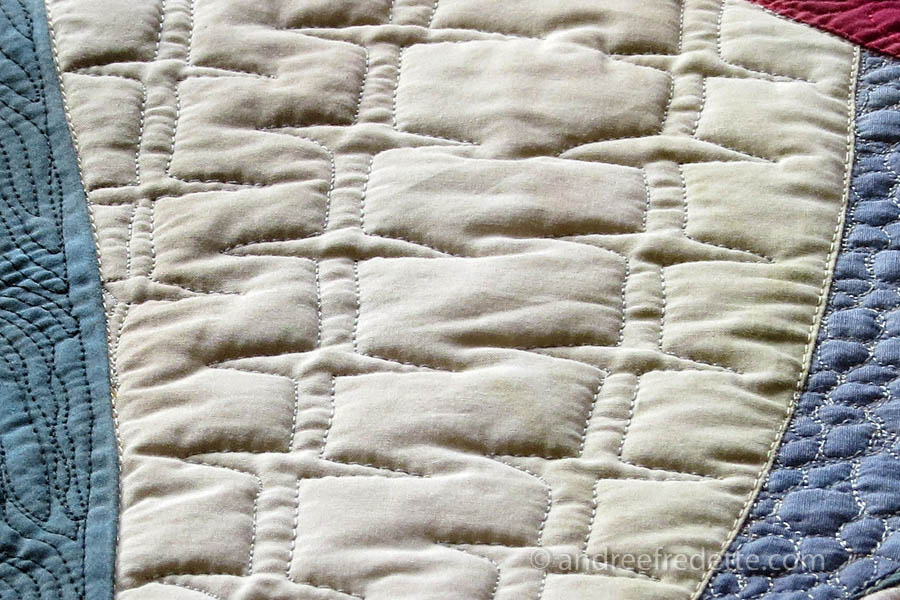
Quilting pattern repeat © Andrée Fredette

Above, a set of thorny lines, reminding me of a certain palm tree that was covered in thorns. Nasty thing! (Yes, I accidentally brushed against it and learned a valuable lesson about watching where I am heading…)
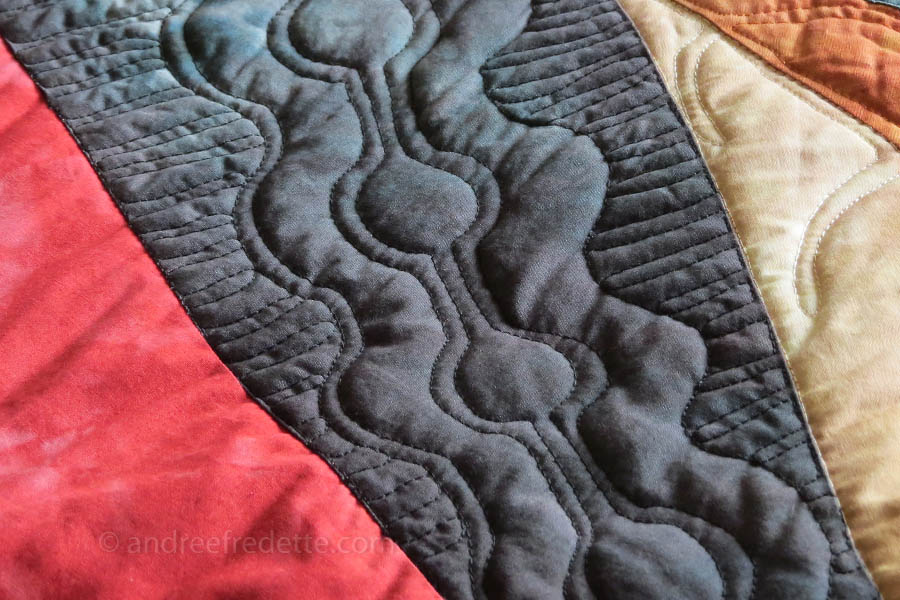
Quilting Density Contrast © Andrée Fredette

Above, the wool batting “puffiness” quality shows up between tighter lines of stitching.
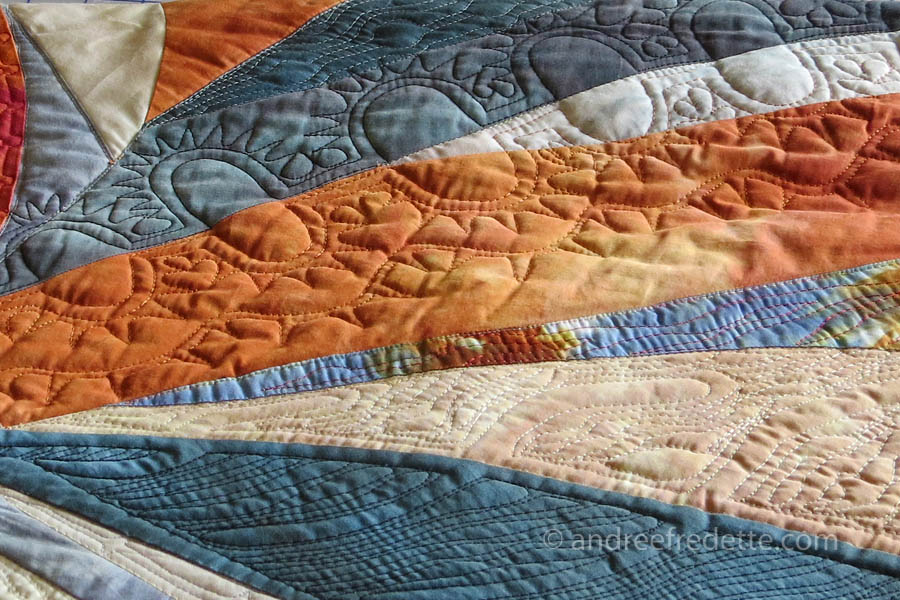
Quilting Pattern Contrast © Andrée Fredette

I think that by varying the scale and density of mark-making, I can achieve a more interesting surface. Big contrast.
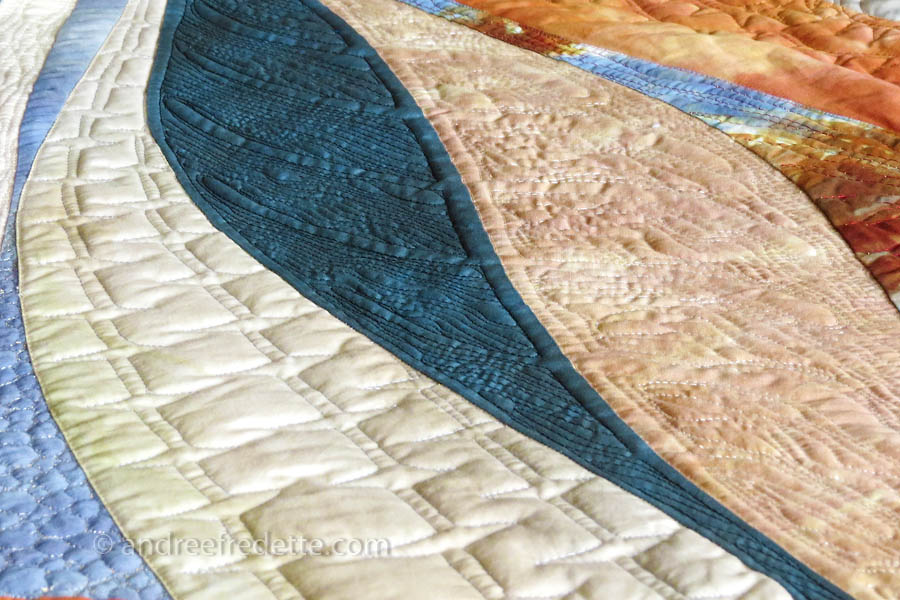
Quilting Density Contrast2 © Andrée Fredette

Above, another angle.

And to close this post, a leaf that was washed ashore near Cairns. With a little filter play…
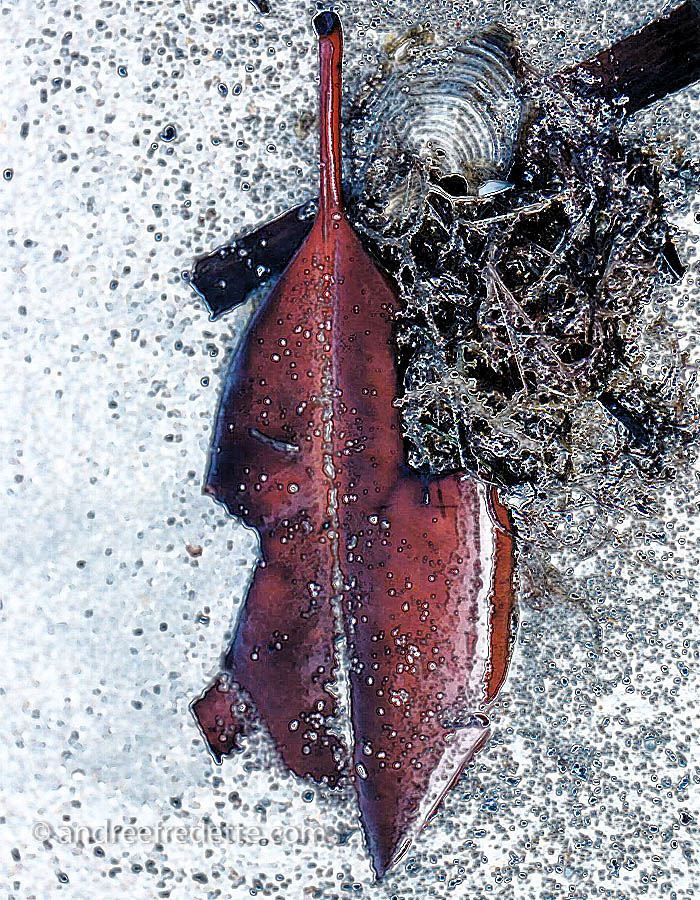
A leaf, washed ashore near Cairns, Australia. Photo © Andrée Fredette

Southern sea creatures in Seattle

On a grey and rainy day in Seattle, a visit to the Seattle Aquarium means entering a world of exuberant colours. A carnival of textures, particularly in the Southern Pacific section of the Aquarium…
Southern Pacific anemone. Photo © Andrée Fredette

I admit that I was lazy and did not write down the names of these critters, anemones, and corals. I just feasted on their looks.
Southern Pacific soft coral. © Andrée Fredette

The corals (or are they anemones?) are spectacularly beautiful.  Luminescent, almost. Their texture is very inspiring for a textile artist.

Souther Pacific coral. Photo © Andrée Fredette

Here is another example of coral – which looks a lot like a group of anemones but is not, apparently.

Giant clam mantle. Photo © Andrée Fredette
And this riot of lines is the mantle of a giant clam. I spent a good deal of time admiring its markings, a recipe for drawing lines.  The underwater world is a great source of inspiration on the use of colour, contrast, and line.

Oh, and at the top of this post, the Lionfish (Pterois) is my “over the top” poster version of this very dangerous, venomous creature. This is a fish that offers plenty of warning…

In the same tank, I spotted its cousin, the Clearfin Lionfish (Pterois radiata) on a side wall. I caught a slightly out of focus shot of it, below.

Clearfin Lionfish. Photo © Andrée Fredette

Lines, lines everywhere. Some lines as a form of come hither, some lines as forms of serious warning. And colour, naturally.

Quilt and Stitch… Some ideas, Part 4

If you have read the preceding parts of this series (Quilt and Stitch posts: One, Two and Three), you know that I get my ideas from nature. A leaf pattern, a stem, wave action, water… And in this case, water, definitely.
IMG_0403

Above, this is another example of my little “corridors” or lanes, first drawn with a straight stitch (well, meandering, but straight, if you get my drift…), and then filled with a motif. I chose the curl to hint at flow, eddies of water. In this case, a piece about the desert in Australia, absent water…

Machine embroidery and quilting. Photo © Andrée Fredette

It usually takes me a long time of staring at a quilt top before making a decision on exactly how I will go about texturing it.  Sometimes, I will put the finished quilt top away for weeks, before bringing it out, hanging it on my work wall and taking a fresh look at it. In other cases, I know how I will proceed even before finishing the top.

In earlier examples from Quilt and Stitch Ideas, I showed examples of how some quilts “tell me” that the quilting lines or motifs should remain within colour boundaries,  within the lines.

But other quilts call for lines that flow across the whole piece. I carry the lines across those boundaries, because it feels right.

Machine embroidery and quilting. Photo © Andrée Fredette

This last image shows how much fun it is to compose patterns intuitively. Looks like critters coming out of the ocean, doesn’t it?